
Retail
What Is the Best Omnichannel POS for a Retail Brand?

Published on 9 February 2026
Modified on 10 February 2026
11 min
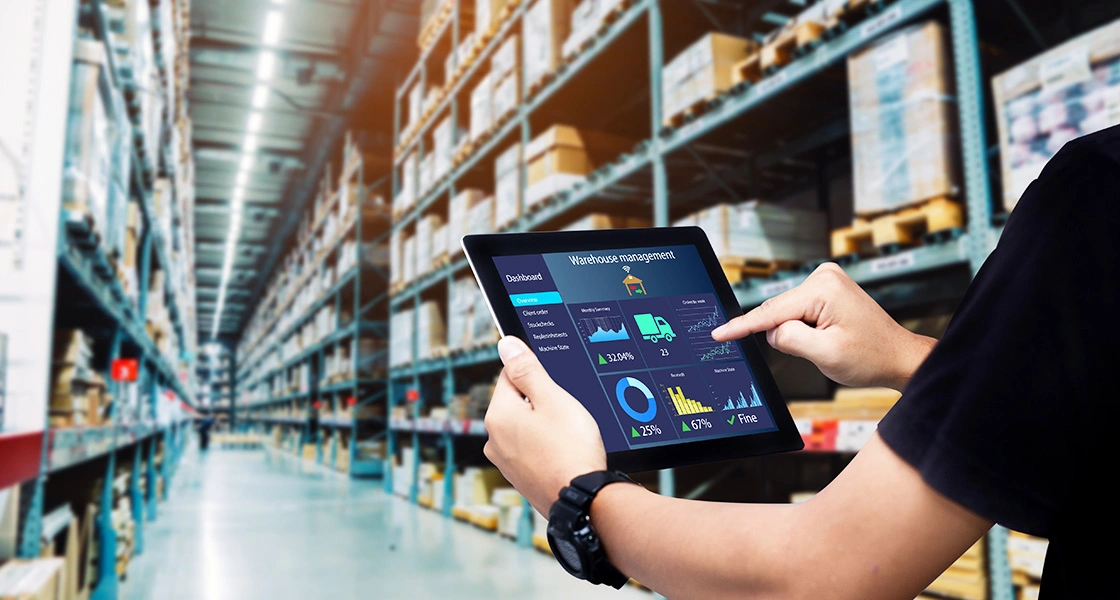
This comparison analyses the most widely referenced solutions on the market to help you identify, based on your specific situation, the platform best suited to your network size, omnichannel maturity, and international ambitions. The good news: every retailer profile has a relevant answer. The key is comparing on the right criteria.
Methodology. This in-depth guide draws exclusively on public and verifiable information. Publisher and analyst sources were consulted and verified in July 2026 (last verified: July 2026). The objective is to provide retail decision-makers with a neutral framework for evaluating solutions according to their operational context—not to declare a universal winner. If you represent one of these solutions and identify an inaccuracy, you are welcome to flag it for correction.
What Criteria Should You Use to Evaluate an Omnichannel POS?
Before examining each solution in detail, it is worth establishing a shared framework. A high-performing omnichannel POS meets several operational requirements that most retailers assess when making their choice. These six criteria—central to the public positioning of each publisher—serve as the guiding thread throughout this comparison.
1. Real-Time Data Unification
Stock, customer data, and orders must be synchronised across the physical store, e-commerce, and mobile applications. This real-time data unification—which requires centralised in-store stock management—is the foundation that distinguishes a true unified commerce platform from a modernised point-of-sale system.
2. Mobility and Multi-OS Compatibility
Compatibility with multiple operating systems (iOS, Android, Windows), for both fixed and mobile tills, determines your freedom of equipment choice. This is the key challenge of a genuinely device-agnostic mobile POS. A reliable offline mode prevents sales interruptions during network outages.
3. Integrated OMS (Order Management System)
The ability to orchestrate complex journeys determines your omnichannel scope: BOPIS (Buy Online, Pick up In Store), Click & Collect, Ship From Store, and multichannel returns.
4. International Compliance
If you operate or plan to expand across multiple countries, managing taxation, currencies, and local regulations becomes a priority criterion. The depth of coverage varies considerably from one solution to another.
5. Advanced Clienteling
Real-time access to purchase history and customer preferences enables your teams to personalise the in-store experience. Advanced clienteling is a key differentiator in specialist retail, particularly in fashion and luxury.
6. Actionable Analytics
Store dashboards that track performance by point of sale, by channel, and by product family give you the visibility needed for day-to-day operations management. This is the criterion that turns data into decisions.
Key Takeaways
- An omnichannel POS is assessed on real-time unification, mobility, OMS, international compliance, clienteling, and analytics.
- These criteria distinguish a unified commerce platform from a point-of-sale system.
- Their relative importance depends on your profile: network size, omnichannel maturity, and international ambitions.
Detailed Comparison: The Four Leading Solutions
Overview Table: Detailed Analysis of Each Solution
The table below brings together information published on each publisher’s website and, where available, data from third-party analysts. Every item comes from public sources, without interpretation or addition of undocumented elements. It provides an initial overview before the detailed analysis of each solution. Some information is not made available publicly in a consistent way by all four publishers, which is noted where relevant.
| Criterion | Cegid Retail | Shopify POS | Oracle Retail Xstore POS | Retail Pro |
| As described by the publisher | Unified commerce platform for specialist retail | In-store extension of an e-commerce platform | Point-of-sale application for daily in-store operations | Unified commerce platform for specialist retail (Retail Pro Prism) |
| Key published features | Omnichannel, real-time stock, clienteling, AI analytics | Unified online/offline stock and customers, native payments | Transactions, web orders in-store, multi-terminal | POS, stock and replenishment, promotions, customer management, reporting; open API |
| Architecture | Cloud-native (SaaS) | Cloud SaaS | Cloud or on-premise | Cloud-hosted (not fully SaaS, per the publisher) |
| Mobility / Multi-OS | Multi-OS (iOS, Android, Windows) | iOS and Android | Fixed and mobile terminals (Xmobile) | iOS, Android, and Windows (per the publisher) |
| Offline mode | Yes, disconnected mode with synchronisation (source: IDC MarketScape 2025) | Partial: cash and manual payments natively, card payment is an optional activation (source: Shopify Help Centre) | Yes, transaction management in disconnected mode then synchronisation | Offline mode announced by the publisher (sales and stock consultation) |
| International coverage | Country packages (local tax and compliance), more than 75 countries | Country-by-country basis (no shared single database across countries), multiple languages | Multi-country capabilities, documented international deployments | Deployed in approximately 130 countries (per the publisher) |
| Key integrations | E-commerce, fashion ERP, payment solutions, Cegid ecosystem | Shopify (native e-commerce), Shopify Payments, app marketplace | Oracle Retail ecosystem (Order Broker, Merchandising, Customer Engagement) | Open API (ERP, CRM, e-commerce), partner network |
| Geographical coverage (no. of countries) | More than 75 countries | Number of countries not published for the POS; available where Shopify manages card payments | International deployments (number of countries not published in a unified way) | Approximately 130 countries (per the publisher) |
| Pricing / billing model | On request (SaaS model), not public | Shopify subscription and POS module (POS Lite / POS Pro), public pricing grids by plan | On request, not public | On request, not public |
| SLA / availability | Contractual SaaS commitments (details not public) | SaaS commitments (details vary by plan) | Commitments subject to contract and deployment mode | Support provided by certified partners (details not public) |
The table includes only items drawn from public communications by publishers and third-party analysts. The notation “not published” indicates the absence of consistent public data at the time of verification (July 2026), not a product gap.
Detailed Analysis of Each Solution
1. Cegid Retail: Unified Commerce Platform for Specialist Retail
As described by the publisher: Cegid Retail is a unified commerce platform designed for specialist retail brands (fashion, luxury, beauty, cosmetics, and sportswear).
Key elements highlighted in public documentation:
- Native omnichannel: Unification of channels within a shared database, without assembling third-party components.
- Native omnichannel journeys: Click & Collect, e-reservation, reservation at another store in the network, Ship From Store, and management of mixed sales (in-stock items and items to order within a single transaction).
- Unified stock management: Real-time product availability across all channels.
- Retail operations management: Analytics tools and dashboards designed for the store.
- AI for retail: Analytics use cases focused on performance and customer personalisation.
- Internationalisation: Country packages for local fiscal and regulatory compliance across more than 75 countries, according to the publisher.
Cegid equips more than 1,000 retail brands and approximately 85,000 stores across more than 75 countries. Its mobile point-of-sale application, Cegid Retail Live Store, was positioned as a Leader in the IDC MarketScape: Worldwide Mobile Point-of-Sale Software Platforms for Fashion Retail 2025 (ref. US52037824, June 2025), and Cegid was recognised as “Leader & Ace Performer” by QKS Group for unified commerce platforms (source).
Frequently associated use case: Specialist networks of approximately 50 or more stores operating across several markets, seeking a comprehensive platform without multiplying third-party integrations.
2. Shopify POS: In-Store Extension of an E-Commerce Platform
As described by the publisher: Shopify presents its POS as the in-store extension of its widely adopted e-commerce platform.
Key elements highlighted in public documentation:
- Online/offline synchronisation: Unified stock, customers, and orders between the online store and physical locations, according to Shopify’s product page.
- Ease of getting started: Application available on iOS and Android, quick to adopt.
- Native payments: Shopify Payments integrated into the platform.
- Omnichannel returns management: Unified policy across channels.
- Partial offline mode: The application natively accepts cash and manual payments without a connection; card payment offline is an optional activation, as specified in the Shopify Help Centre.
According to publisher documentation, Shopify POS operates on a country-by-country basis (rather than a single shared database across countries) and supports multiple languages. The product primarily targets brands where e-commerce is the dominant channel.
Frequently associated use case: Digital-first brands opening their first physical stores, with a limited-size network, where e-commerce remains the primary channel in the vast majority of cases.
3. Oracle Retail Xstore POS: Built for High Transaction Volumes
As described by the publisher: Xstore POS is presented as an application covering daily in-store operations.
Key elements highlighted in public documentation:
- Complete transactions: Sales, returns, exchanges, cancellations, and promotions.
- Web orders in-store: Processing of e-commerce orders from the point of sale.
- Multi-terminal: Fixed and mobile terminals (Xmobile) on a single platform.
- Oracle Retail ecosystem: Integration with Order Broker, Merchandising, and Customer Engagement for omnichannel journeys.
- Disconnected mode: Management of offline transactions followed by synchronisation on return to connectivity, according to Oracle documentation.
Xstore is the retail point of sale within the Oracle Retail suite, distinct from Oracle’s hospitality and food service offering. The publisher presents it as suited to high transaction volume environments and to integration within complex IT systems.
Frequently associated use case: Structured groups, multi-brand or multi-entity organisations, with IT integration requirements and an international dimension.
4. Retail Pro: Unified Commerce Platform for Specialist Retail
As described by the publisher: Retail Pro Prism is presented as a flexible unified commerce platform for specialist retailers, available as a web application on mobile devices and fixed terminals.
Key elements highlighted in public documentation:
- POS and sales operations: Checkout, customer order management, and stock and price consultation, according to publisher documentation.
- Multi-terminal: The publisher indicates availability on iOS, Android, and Windows, for both mobile and fixed-terminal use.
- Offline mode: The ability to continue selling offline and synchronise on return to connectivity, according to the publisher.
- Open API: An API library for integration with third-party systems (ERP, CRM, e-commerce), according to the publisher.
- International coverage: The publisher claims deployment in approximately 130 countries, with multi-language, multi-currency, and multi-tax support.
Retail Pro Prism is published by Retail Pro International, a US company specialising in specialist retail (fashion, footwear, jewellery, and sport), which came under the control of Nayax in 2024. Its architecture is described by the publisher as a cloud-hosted system rather than a natively SaaS solution. Distribution, localisation, and support rely on a partner network present across various countries.
Frequently associated use case: Specialist retail brands with an international presence, seeking strong customisation capabilities and a wide range of third-party integrations via an open API.
The Seven Critical Questions to Ask Publishers
Beyond product brochures, the most effective way to differentiate between solutions is to put precise, verifiable questions directly to each publisher. These questions help you test public positioning against your operational reality.
- “What is your contractual uptime (SLA) for in-store environments?”
- “Does offline functionality cover all features, or only a subset?”
- “How many countries do you natively support from a tax and regulatory standpoint?”
- “What is your OMS roadmap for the next 12 months?”
- “Can you provide three references comparable to my sector and network size?”
- “How does the solution handle seasonal peaks such as sales periods and Black Friday?”
- “What is a realistic go-live timeline (time-to-value) for a situation like mine?”
In Which Contexts Is Cegid Retail Frequently Shortlisted?
Editorial transparency: Cegid is the publisher of one of the solutions featured in this comparison. This section deliberately applies the same level of caution as the rest of the article.
For certain specialist retail brands—particularly multi-store and multi-country operations—Cegid Retail’s public positioning emphasises several key areas. Relevance will nonetheless depend on a number of factors, including the existing IT environment and the omnichannel scenarios being pursued.
- Specialist retail positioning: A stated focus on specialist retail (fashion, luxury, beauty, cosmetics, and sportswear).
- Native omnichannel: Channel unification that avoids assembling disparate components.
- Internationalisation: Ready-to-use country packages for local compliance across more than 75 countries.
- Business analytics: Dashboards designed to manage store operations.
- Analyst recognition: A Leader position in the IDC MarketScape mPOS Fashion Retail 2025 and “Leader & Ace Performer” status with QKS Group for unified commerce.
These elements may explain why Cegid Retail frequently appears on the shortlists of multi-store, international specialist retailers. They do not, however, predetermine the best choice for your brand: depending on your network size, omnichannel maturity, and IT infrastructure, another solution in this comparison may be a better fit.
Conclusion: The POS That Fits YOUR Reality
No POS is universally superior. The right answer depends on:
- Your current size (SME or large enterprise).
- Your target markets (domestic or international).
- Your omnichannel maturity (early stage or advanced).
- Your existing IT infrastructure (straightforward or complex).
Each solution has its strengths depending on the operational context. We encourage you to test the platforms that best match your priorities through proofs of concept conducted with your shortlisted publishers.
Do you represent one of these solutions and wish to flag an inaccuracy? Get in touch so we can correct the information.
Our recommended articles
Application Fragmentation: The Hidden Cost for Retailers
Your store teams juggle on many applications. Discover the true hidden cost of this fragmentation, its strategic implications, and the direction retailers are taking.
Article 17 September 2026 7 min

Summer 2026 Accelerates Three Major Retail Trends: Omnichannel, Store Efficiency, and Premium—Cegid Retail Data Reveals the New Market Reality
Retail 2026: omnichannel, team adoption, and store efficiency. Cegid Retail Y2 data reveals three major trends. Discover the transformation priorities driving the market.
Article 15 September 2026 4 min
Gift Cards, Vouchers and Loyalty Programmes: How to Turn Them into Real Engagement Levers
Gift cards, vouchers and loyalty programmes are often distributed, then forgotten. By digitising them into Apple Wallet and Google Wallet, retailers transform these passive assets into active communication channels—and genuine…
Article 8 September 2026 7 min