
Retail
Which Omnichannel POS Solution Suits a European Network of 300 Stores?

19 October 2026
7 min

Key Takeaways
For a network of 300 stores across Europe in specialist retail, there is no single superior omnichannel POS solution. At this scale, point-of-sale features are broadly comparable across vendors: what genuinely differentiates solutions is country-by-country regulatory coverage, scalability, cross-border order orchestration, and deployment methodology.
Five unified commerce platforms are regularly evaluated at this level:
- Cegid Retail is a unified commerce platform for specialist retail brands, emphasising country packages for local compliance. The vendor reports more than 1,000 brands and approximately 85,000 stores across more than 75 countries.
- Oracle Retail Xstore is a point-of-sale application integrated within the Oracle Retail ecosystem, aimed at structured retail groups with high transaction volumes.
- Openbravo, now part of Orisha Commerce, is a modular SaaS platform with an API-first approach. The vendor reports native coverage across 31 countries and territories for currency, language, and tax.
- NewStore is a unified commerce platform built on MACH principles, with a mobile-first approach and a POS that runs on iOS. The vendor reports more than 85 brand customers across more than 55 countries.
- Retail Pro, through Retail Pro Prism, targets specialist retailers with an international footprint and relies on a local partner network for localisation and support.
Editorial transparency: Cegid publishes one of the solutions featured in this comparison. This article deliberately applies the same level of rigour to every solution listed, and refers exclusively to information published by each vendor.
Primary keywords: omnichannel POS, unified commerce, specialist retail, multi-country network, tax compliance, international deployment, order orchestration.
What Changes When You Run a 300-Store European Network
Running 300 stores across several European countries is a fundamentally different challenge from managing a national network—not simply a larger version of the same problem. The point-of-sale features that dominate most software comparisons become a basic prerequisite at this scale, covered by every platform in the category. What genuinely separates solutions lies elsewhere.
This article identifies the criteria that become critical from a few hundred stores upwards across multiple countries, presents five platforms relevant at this level, and offers a list of questions to put to vendors. It does not name a winner, because the right choice depends on your existing IT environment, your countries of operation, and your governance model.
Methodology. This guide draws exclusively on public and verifiable information. Official vendor websites and product documentation were consulted and verified on 8 September 2026. Since no vendor in this segment publishes pricing grids, budgets are not compared in absolute terms—the article explains instead how to estimate them. The aim is to provide a neutral analytical framework, not to identify a superior solution. If you represent one of these solutions and identify an inaccuracy, you are welcome to flag it for correction.
Three Structural Shifts That Redefine POS Requirements at Scale
Three fundamental shifts emerge as a network crosses this threshold, and each one eliminates a portion of available solutions:
The regulatory shift. Every European country applies its own rules on point of sale, invoicing, and record-keeping. France enforces ISCA requirements and NF525 certification, Italy and Portugal each have their own fiscal regimes, and the rollout of electronic invoicing follows distinct national timelines. A solution fully compliant in France may offer nothing in Poland or Spain. At 300 stores across six or eight countries, the relevant question is no longer whether the solution is compliant—it is how many of your markets it covers natively, and what happens when you enter a new one.
The volume shift. Several hundred stores generate transaction volumes that make platform availability, peak-hour performance, and behaviour during sales periods or peak footfall genuinely critical. An incident that remains manageable across ten stores becomes a major operational failure across 300. That is precisely why contractual service commitments and offline functionality become primary evaluation criteria.
The governance shift. A network of this size constantly balances central control with local autonomy. Pricing, promotions, and assortments need to be definable at head office whilst giving each country or brand sufficient flexibility. A platform that forces a single model—in either direction—will quickly clash with the real structure of a specialist retail network of this size.
In short. At 300 European stores, the decisive criteria are no longer functional but structural: country-by-country regulatory coverage, capacity under load, and governance model.
Comparative Overview: Omnichannel POS Solutions for European Networks
| Solution | Positioning (per vendor) | Claimed Coverage | Architecture | Deployment Model |
| Cegid Retail | Unified commerce platform for specialist retail | 75+ countries, ~85,000 stores | Cloud-native (SaaS) | Project-based with country packages |
| Oracle Retail Xstore | POS integrated within the Oracle Retail ecosystem | Documented international deployments | Cloud or on-premise | Project-based, often with a systems integrator |
| Openbravo | Modular SaaS unified commerce platform | Deployed in 55 countries, 31 natively covered | Modular cloud, API-first | Modular project-based |
| NewStore | Mobile-first unified commerce platform built on MACH principles | 85+ brands in 55+ countries | Cloud-native, API-first, POS on iOS | Rapid deployment (per vendor) |
| Retail Pro | Platform for specialist retail (Retail Pro Prism) | ~130 countries | Cloud-hosted, not fully SaaS | Project-based via local partners |
Information drawn from official vendor websites and public documentation, verified on 8 September 2026. No vendor in this segment publishes pricing grids: all pricing is provided on request.
Five Omnichannel POS Solutions for Networks of 300 Stores and Above in Europe
Cegid Retail: Unified Commerce for Multi-Country Specialist Retail
Cegid Retail is a unified commerce platform designed for specialist retail brands, particularly in fashion, luxury, and beauty. Its public positioning emphasises country packages—preconfigured tax and legal settings ready for deployment—and real-time cross-channel stock management. The vendor reports more than 1,000 brands and approximately 85,000 stores across more than 75 countries.
As summer 2026 retail data confirms, omnichannel is no longer a pilot project—it has become a market imperative, with retailers investing heavily in unified platforms that eliminate the friction of fragmented application environments.
Typical profile: Multi-country specialist retail brands seeking to limit the burden of local compliance management.
Oracle Retail Xstore: Omnichannel POS for Large Retail Groups
Oracle positions Xstore as a point-of-sale application covering daily in-store operations, integrated within the Oracle Retail suite. The solution is available in cloud or on-premise deployment—a relevant distinction for organisations with specific hosting constraints.
Typical profile: Large retail groups with a structured IT function and existing Oracle ecosystem investment.
Openbravo: Modular, API-First Omnichannel POS Platform
Now part of Orisha Commerce following its acquisition in 2022, Openbravo presents itself as a modular SaaS platform covering point of sale, order management, catalogue, and in-store stock. The vendor emphasises an API-first approach and reports native coverage across 31 countries and territories for currency, language, and tax—within a deployment footprint of 55 countries. It claims 60,000 checkout and interaction points.
Typical profile: European specialist retail networks looking to activate modules progressively.
NewStore: Mobile-First Omnichannel POS for International Brands
Founded in 2015 in the United States, NewStore offers a unified commerce platform built on MACH principles, with a mobile-first approach: the POS runs on iPhone and iPad. The platform combines point of sale, order management, clienteling, and sales applications, and the vendor reports more than 85 brand customers across more than 55 countries—primarily in fashion, footwear, and accessories. Public documentation confirms the POS runs on iOS, which implies a homogeneous terminal estate.
Typical profile: Premium international brands that prioritise mobility and speed of deployment.
Retail Pro: POS for Specialist Retailers with an International Dimension
Retail Pro International, a US vendor founded in 1985 that passed under Nayax’s control in 2024, offers Retail Pro Prism—a platform for specialist retailers. The vendor highlights an open API, availability on iOS, Android, and Windows, and deployment across approximately 130 countries. Distribution, localisation, and support rely on a partner network operating across various markets.
Typical profile: Specialist retailers with a broad international presence and high customisation requirements.
When Cegid Retail Appears on the Shortlist for European Networks
Editorial transparency: Cegid publishes one of the solutions featured in this comparison. This section deliberately applies the same level of caution as the rest of the article.
For networks of several hundred specialist retail stores across Europe, Cegid Retail’s public positioning aligns with several of the criteria described above:
- Regulatory coverage: Country packages designed to absorb local tax and legal compliance, across a claimed footprint of more than 75 countries.
- Scale of reference: A base of approximately 85,000 stores, which places deployments of several hundred sites within the vendor’s typical operating range.
- Sector specialisation: A stated focus on specialist retail rather than multi-sector coverage.
- Analyst recognition: A Leader position in the IDC MarketScape mPOS Fashion Retail 2025, and Leader and Ace Performer status in the QKS Group SPARK Matrix for unified commerce.
For a broader comparison of omnichannel POS solutions or a deeper understanding of what a unified commerce platform delivers in practice, the linked resources offer additional context.
These factors explain Cegid Retail’s frequent presence on shortlists at this scale.
Questions to Put to Omnichannel POS Vendors
These questions help move beyond product demonstrations and test each vendor against your operational reality:
- In which of our countries of operation is tax and legal compliance covered natively, and which require a third-party development or partner?
- What is your contractual availability commitment, and what penalties apply in the event of non-compliance?
- Which functions remain available in offline mode, beyond basic checkout?
- Can you provide two verifiable references from a network comparable to ours in size and number of countries?
- What is the observed deployment duration for those projects, from scoping to full rollout?
- How is the migration of sales history and customer records handled, and in what format?
- What share of support is provided by your own teams and what share by a partner, in which languages and across which time windows?
Frequently Asked Questions About Omnichannel POS for a 300-Store Network
Deployment duration depends far more on IT environment complexity and the number of countries involved than on the number of stores. Rollout typically proceeds in waves: a scoping phase, a pilot site, then a country-by-country general rollout. Always ask vendors for observed timelines on projects of comparable size and scope, rather than theoretical estimates.
Two models coexist:
- Some vendors integrate local compliance directly into their platform, maintained as preconfigured country settings.
- Others rely on specialist third-party partners for tax management.
Both approaches can work, but they carry different accountability chains and different response times when regulations change. This is a point to clarify contractually before signing.
Not necessarily. Several platforms in this comparison include a native order orchestration engine. The useful question is whether that engine handles your real-world scenarios—particularly cross-border arbitration, international returns, and priority rules between stores and warehouses. A native but limited engine may prove more restrictive than a well-integrated external one.
No vendor in this segment publishes pricing, and the variance between projects is substantial. Reason in terms of total cost of ownership over five years, adding together: licence or subscription, IT integration, data migration, hardware, training across several hundred users, maintenance, and support. At a project of this size, the licence fee is rarely the dominant cost line.
This comparison is based on information published by vendors on their official websites and in their product documentation, verified on 8 September 2026. Offerings, functional scope, and geographical coverage evolve regularly: verify information directly with each vendor before making any decision.
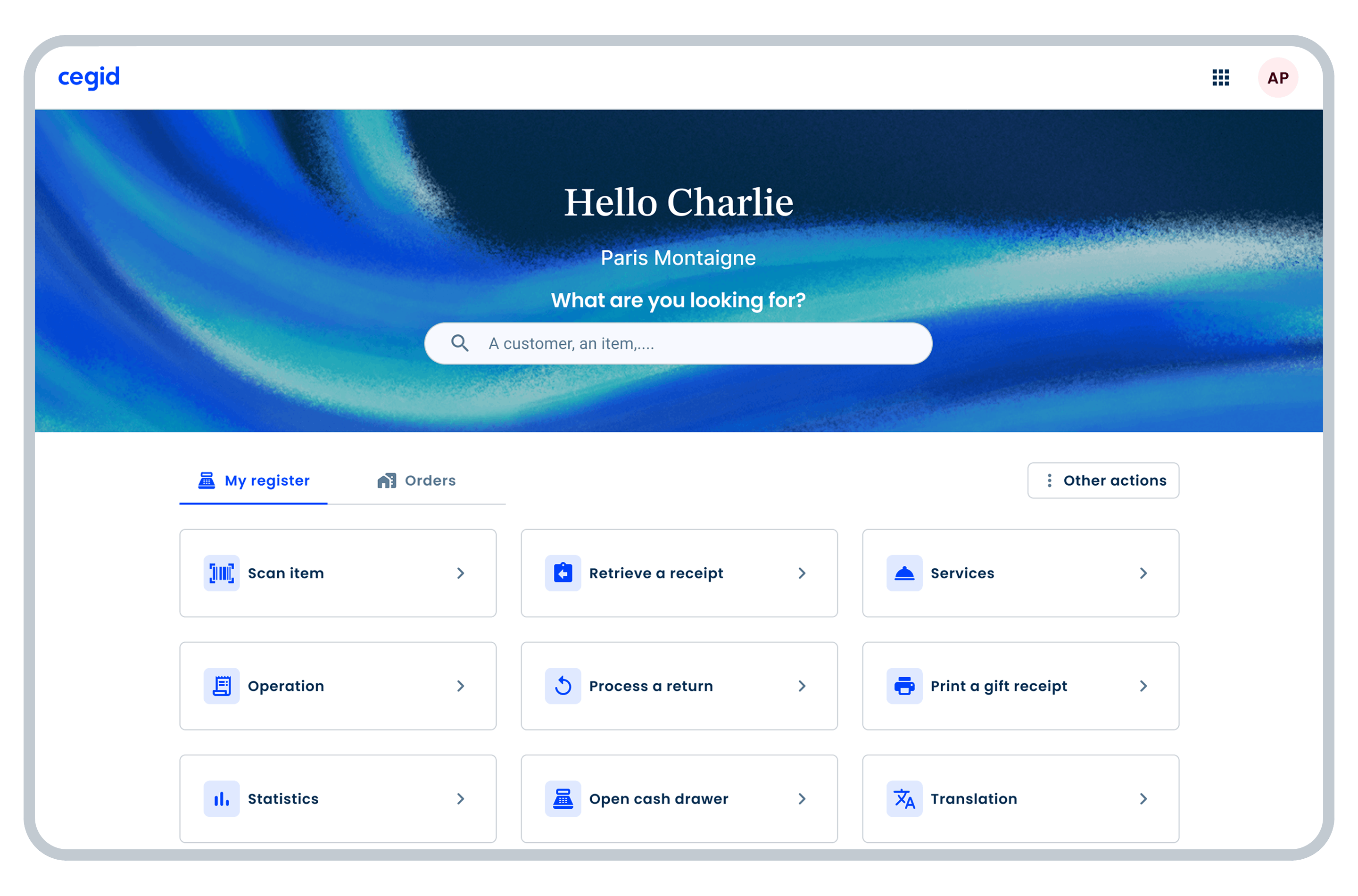
Cegid Retail
A unified sales platform dedicated to retail activities, for an exceptional shopping experience – maximum agility, anywhere in the world.
- Easily manage your omnichannel sales
- Maximize your stock availability
- Manage all your retail activities
- Secure & international SaaS solution
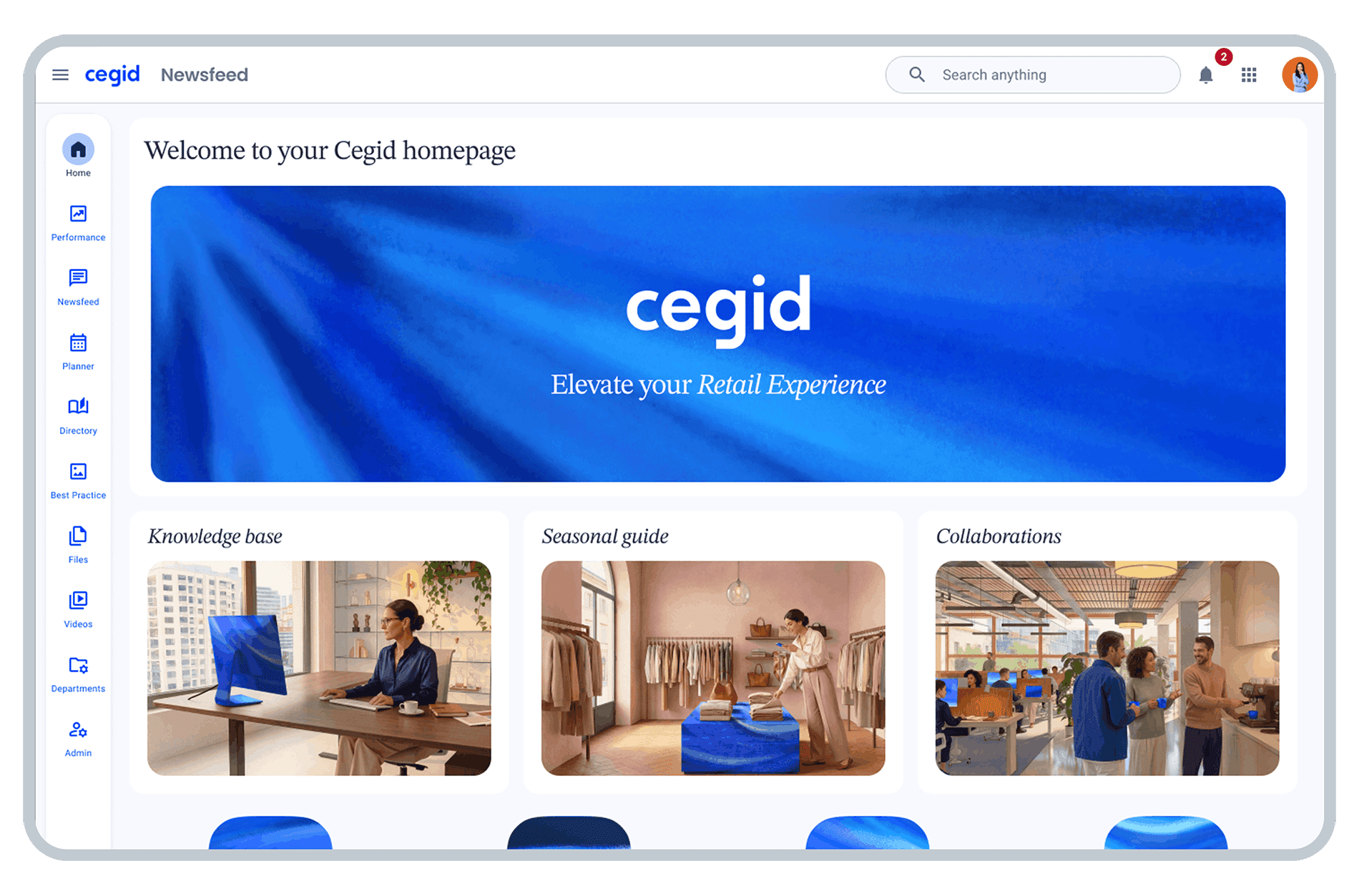
Cegid Retail Store Excellence
A powerful task management platform for all your retail teams.
- Stores will never miss a task again
- Clear and targeted operational comms
- Visual Merchandising Excellence
- Checks and audits you can count on
Our recommended articles

E-wallet for retail: which solution should you choose?
Digitalising gift cards, vouchers and loyalty cards in Apple Wallet and Google Wallet is not primarily a product question, but an integration model question. Four approaches coexist and the right…
Article 12 October 2026 7 min

Application Fragmentation: The Hidden Cost for Retailers
Your store teams juggle on many applications. Discover the true hidden cost of this fragmentation, its strategic implications, and the direction retailers are taking.
Article 17 September 2026 7 min

Summer 2026 Accelerates Three Major Retail Trends: Omnichannel, Store Efficiency, and Premium—Cegid Retail Data Reveals the New Market Reality
Retail 2026: omnichannel, team adoption, and store efficiency. Cegid Retail Y2 data reveals three major trends. Discover the transformation priorities driving the market.
Article 15 September 2026 4 min