
Retail
The Future of Retail – How to Embrace Direct to Consumer and Pre-Owned Models

Published on 30 December 2025
Modified on 29 December 2025

Consumer preferences are seeing strong growth for retailers that are able to trade through multiple channels and interfaces (stores, online, multi-brand marketplaces, social media and distribution); these models are central to how consumers, particularly Gen Z and Millennials, want to engage with brands - directly, sustainably and on their own terms.
For CEOs, the challenge is how to integrate them into strategies that preserve brand integrity while unlocking new growth.
Direct to Consumer (DTC)
DTC allows brands to connect with customers without intermediaries, offering better margins, deeper relationships and full control over the customer experience.
According to research by EY into shifting consumer expectations reveals their need for control and personalisation; 68% of consumers want expert advice on high-value purchases, while Accenture found that (EY), and 66% of Gen Z are willing to share data for personalised offers. A DTC model thus enables brands to deliver tailored experiences at scale.
Gen Z in particular values direct engagement. GlobalWebIndex found that 49% trust influencers for product recommendations and they expect brands to be transparent, authentic and aligned with their values.
DTC also provides agility, enabling rapid adjustments in pricing, product launches and customer engagement, critical when, as World Economic Forum found, 54% of economists expect global economic conditions to remain challenging.
Pre-Owned and Resale
The resale market is projected to outpace traditional retail growth, fuelled by consumer demand for affordability, uniqueness and sustainability. From luxury houses offered as part of a circular model to retailers experimenting with trade-in programmes, resale is becoming mainstream.
A key element in this model is sustainability as consumers pressure retailers to reduce their environmental footprint. Regulations from the European Green Deal to national climate laws are intensifying this shift. Another element value-conscious spending, in the context of squeezed margins and cautious spending, resale offers customers affordable options without compromising on quality or brand prestige. And a further element is brand protection; by offering certified pre-owned channels, brands can ensure quality, retain ownership of their narrative and fend off grey-market resellers.
The Agenda for CEOs
For CEOs, the opportunity lies in building strategies that make DTC and resale engines of growth rather than a distraction. This depends on being able to balance technology, operations and culture.
1. Redefine the Role of Stores
Even in a digital-first world, the store remains central. IBM reports that 67% of Gen Z prefer physical shopping, but they expect a hybrid experience—where digital convenience meets human service. DTC and resale can be brought to life in-store through curated spaces, trade-in counters, or experiential storytelling.
Cegid Retail solutions empower associates with mobile point-of-sale, unified commerce, and collaborative tools like Cegid Retail Live Store. These solutions enable staff to deliver seamless service across new and pre-owned channels, while giving HQ real-time visibility into performance.
2. Build Circularity into the Supply Chain
Integrating resale means rethinking logistics, inventory, and product lifecycle management. CEOs should treat resale not as an add-on, but as a core channel requiring the same operational rigour as new products.
With Cegid’s capabilities in unified commerce and store operations planning (enhanced by StorIQ), retailers can streamline complex inventory flows, manage trade-ins, and ensure consistency across markets.
3. Leverage Data and AI for Personalisation
As consumers demand relevance, data becomes the differentiator. Generative AI adoption is already a priority for 64% of retailers (IDC), but its value multiplies in DTC and resale. AI can match customers with the right product—whether new or pre-owned—predict resale demand, and create personalised experiences that strengthen loyalty.
Cegid’s unified commerce data layer, combined with AI-powered analytics, equips retailers to predict trends, personalise engagement, and optimise stock allocation.
4. Safeguard Brand Integrity
DTC and resale offer tremendous upside but also risks. Without careful governance, resale channels can dilute brand perception, and direct selling can strain traditional wholesale relationships. CEOs must set clear guardrails, ensuring that pricing, product quality, and customer experiences reinforce long-term equity.
Meet Gen Z Where They Are
Gen Z is the future customer, and employee, of every retailer. Their habits reveal why DTC and resale must be strategic priorities. They blend digital and physical seamlessly, expecting frictionless shopping and authentic engagement. They want brands to reflect their values. According to Forbes, 60% expect companies to take a stand on social issues. And, they are pragmatic spenders, willing to pay for experiences and sustainability, but quick to embrace pre-owned when it delivers both affordability and authenticity.
The action for CEOs is, winning Gen Z means offering both direct connections and circular options, supported by technology that feels invisible but delivers real value.
Why This Matters Now
Margins remain under pressure worldwide. UK retailers are facing £70bn in added costs due to fiscal changes, while US retailers navigate a “two-speed” consumer who balances value-hunting with occasional indulgence. At the same time, cybersecurity risks are increasing, and competition for customer loyalty is fiercer than ever.
In this market, DTC and pre-owned provide new revenue streams, differentiate the brand and meet rising consumer expectations for sustainability and affordability. Crucially, they also future proof the business against regulatory and economic shocks.
How Cegid Helps Retailers Seize the Opportunity
Cegid is already working with leading global retailers to make DTC and resale strategies viable and profitable. Our solutions enable CEOs to –
Unify commerce – One platform for all sales channels, ensuring consistency across new, pre-owned, online, and in-store.
Empower associates – Mobile tools and real-time insights that allow staff to support trade-ins, personalised selling, and seamless checkout.
Optimise operations – Store operations planning and AI-driven analytics to manage costs, streamline inventory and predict resale demand.
Enhance customer experience – Personalised, omnichannel journeys that meet the expectations of Gen Z and beyond.
A CEO Call to Action
Inside disruption there is always opportunity. By embracing direct to consumer and pre-owned models, CEOs can strengthen customer relationships, unlock new revenue and build future-fit brands.
The decisions made in the next two years will determine which retailers thrive and which are left behind. With the right strategy, and with Cegid as a technology partner, CEOs can turn the challenges into competitive advantage.
For further assistance on this topic

Metaverse, sustainability, data, and the role of sales associates: Retail’s new challenges
Article 15 October 2024 4 min

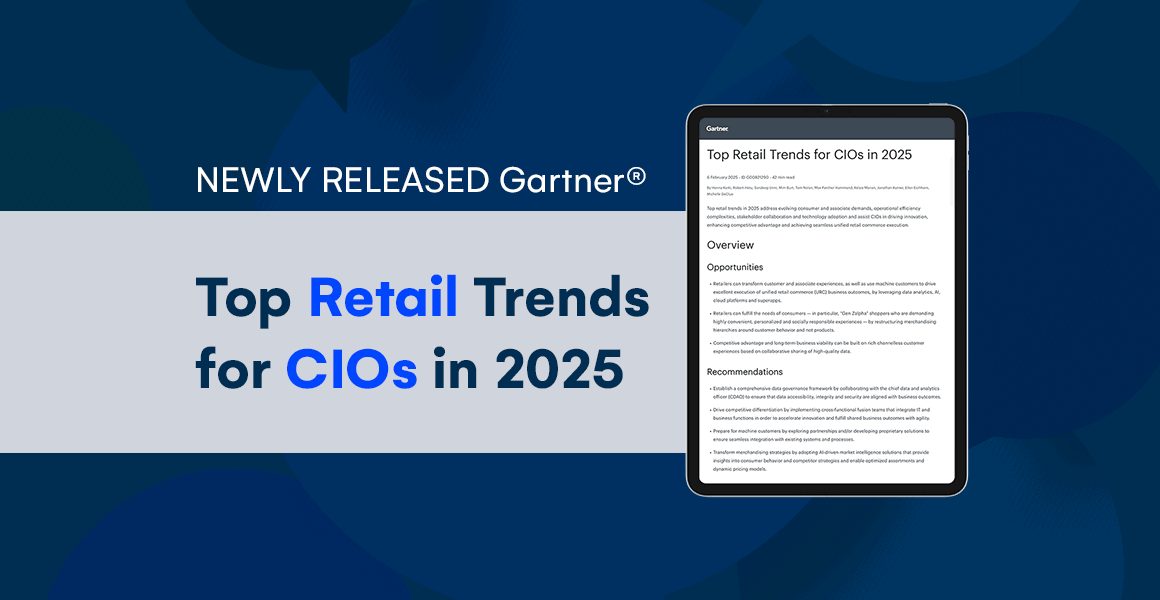
Complementary Gartner® report: Top Retail Trends for CIOs in 2025
Explore top retail trends for CIOs in 2025—consumer demands, efficiency, collaboration, and technology adoption. Available through Cegid for a limited time. Learn more
Report 24 April 2025
Our recommended articles

Boosting in-store performance in the cosmetics and beauty sectors via unified commerce
Article 27 March 2026 7 min

Tackling IT Challenges in Beauty Retail: Breaking Free from Legacy Constraints
Article 24 March 2026 5 min

Creating Immersive Retail Spaces: Lessons from DIY, Gardening and Specialty Foods
Article 20 March 2026 4 min