
Retail
Omnichannel POS Solutions on the Market Compared for Retail in 2026

30 April 2026
12 min

Choosing an omnichannel POS solution starts with understanding a market that has become sharply segmented. Under a single label, you will find everything from point-of-sale software costing a few tens of pounds per month to unified commerce platforms deployed across several hundred stores. These products do not solve the same problem, and comparing them feature by feature makes little sense.
This comparison therefore offers a map rather than a ranking. It presents the four families that structure the market, the criteria that genuinely distinguish them, the pricing published by vendors where it exists, and the retailer profiles each family suits. The goal is to help you identify your family before entering a detailed comparison of individual solutions.
Methodology
This guide relies exclusively on public and verifiable information. The official pages of each vendor, including their pricing pages, were consulted and verified on 1 September 2026 (last verified: 1 September 2026). The prices shown relate to software only, excluding hardware and transaction fees. The objective is to provide a neutral reading framework for situating solutions within your operational context, not to declare a universal winner. If you represent one of these solutions and spot an inaccuracy, you can flag it to us for correction.
What an Omnichannel POS Actually Covers
Most available comparisons focus on point-of-sale software—the tool that records and secures payment transactions. An omnichannel POS covers a broader scope, and that distinction separates two categories of product that nonetheless appear under the same label.
Point-of-sale software manages payments, payment methods, receipts, tax compliance, and, most commonly, stock tracking per location. It is an essential foundation.
An omnichannel POS solution adds channel unification to that foundation.
In practice, several capabilities define it:
- A single repository: products, stock levels, and customer records are shared across the web, stores, and other channels—with no duplicate entry or delayed synchronisation.
- Order orchestration: an OMS-type engine decides where to pick and despatch each order based on actual availability and proximity.
- Cross-channel journeys: click and collect, e-reservation, ship from store, and in-store returns of online purchases.
- Continuous customer relationships: purchase history and loyalty programmes that are valid across all channels.
- Real-time stock visibility: an item sold in store disappears immediately from online availability.
This difference in scope explains why two solutions with very different price points appear in the same comparison—they do not solve the same problem. To explore this further, read our dedicated article on unified commerce.
In brief
Point-of-sale software records sales. An omnichannel POS solution makes all your channels work together around a common repository. The first thing to check in any omnichannel POS comparison is therefore which scope is actually being discussed.
The Methodology Behind This Comparison
This omnichannel POS comparison rests on seven criteria, chosen because they determine a solution’s capacity to support an omnichannel strategy and because they are verifiable in each vendor’s public documentation.
- Omnichannel coverage: the presence of cross-channel journeys and order orchestration.
- Architecture: native SaaS, hosted cloud, or on-premise deployment.
- Mobility and multi-OS: operating systems supported for mobile payment processing.
- Offline mode: ability to continue selling during a network outage.
- Compliance: French certification and regulatory coverage internationally.
- Integrations: the existence of a documented API and a connector ecosystem.
- Pricing model: publicly listed pricing or quote-based pricing.
A note on prices
The figures cited come from the pricing pages published by each vendor, recorded on 1 September 2026. They relate to software only, excluding hardware, transaction fees, and optional modules, all of which can significantly affect the real cost. Where a vendor does not publish a pricing grid, the label “on request” is used, with no estimate from our side.
This asymmetry matters: comparing a published subscription with a bespoke quote makes no sense in absolute terms, because the two models correspond to different levels of service and customisation.
The Four Families of Omnichannel POS Solutions
An omnichannel POS comparison should be read as a segmentation, not a ranking. Four families stand out clearly, each corresponding to a specific retailer profile and level of omnichannel maturity:
- All-in-one solutions for independent retailers — POS software designed for speed. They prioritise simplicity, a low entry cost, and rapid setup.
- E-commerce-first solutions — built around an online shop, with the physical point of sale operating as an extension of the e-commerce back office.
- Mid-market specialist retail solutions — designed for networks of a few units to a few dozen stores, with deep product catalogues.
- Unified commerce platforms for multi-store retailers — oriented towards structured networks, often international in scope.
Comparison Table of POS Solutions on the Market
| Solution | Family | Profile | Omnichannel Coverage |
|---|---|---|---|
SumUp | All-in-one
| Independent retailers, micro-businesses | Payment processing and commercial management |
Square | All-in-one | Independent retailers, occasional selling | Synchronisation with Square Online |
Hiboutik | All-in-one | Retailers with straightforward needs | E-commerce connectors |
Tactill | All-in-one | Local shops on iPad | Payment processing scope |
Shopify POS | Ecommerce-first | Native web and store synchronisation | Native web and store synchronisation |
Lightspeed Retail | Mid-market specialist retail | Mid-sized networks, large catalogues | E-commerce connectors and multi-site management |
Clictill | Mid-market specialist retail | Retail chains, fashion and beauty | Multi-site management and stock transfers |
Toporder | Mid-market specialist retail | Food retail and local shops | Integrated online selling |
Cegid Retail | Multi-store unified commerce | Specialist retailers from five stores upwards | Single repository, omnichannel journeys, country packages |
Oracle Retail Xstore | Multi-store unified commerce | Large distribution groups | Oracle Retail ecosystem, order orchestration |
Retail Pro | Multi-store unified commerce | Specialist retailers with an international dimension
| Open API, network of local partners |
NewStore | Multi-store unified commerce | Mobile-first brands | Mobile platform and OMS |
Openbravo | Multi-store unified commerce | Large networks and franchises | Modular cloud platform |
Information sourced from official vendor pages, consulted on 1 September 2026. Prices shown relate to software only, excluding hardware and transaction fees, and are subject to change.
Family 1: All-in-One Solutions for Independent Retailers
This family brings together vendors whose proposition is built on ease of use and accessibility. SumUp, Square, Hiboutik, and Tactill are the most visible representatives on the French market.
What They Offer
- Very rapid setup — often under an hour, on standard hardware.
- A low or zero entry cost. SumUp offers a subscription-free plan funded by a 1.75% transaction rate, and Square offers a free point-of-sale application with fees from 1.65% in store. Hiboutik publishes a free version, with its Premium and multi-store options priced at €16.90 and €12.90 per month respectively.
- Readable subscription tiers for broader needs — Tactill, for example, ranges from €29 to €69 per month depending on features, with an additional till at €29 per month.
- Connectors to the main e-commerce platforms for straightforward synchronisation needs.
Who They Suit
These POS solutions are the right fit if you run one or a small number of locations, with a manageable catalogue and omnichannel journeys limited to click and collect. They are often the ideal first setup for a business just starting out.
Their scope remains focused on payment processing and commercial management. Order orchestration across multiple stores, fine-grained variant management across very deep catalogues, and multi-country compliance are not part of their design—and that is not a weakness. It is a deliberate choice consistent with their target audience.
A Note on Real Cost
A free software solution with a commission attached can cost more than a subscription once volumes increase. Between a 1.75% plan with no subscription and a 0.89% plan charged at €19 per month, the break-even point sits at around €2,600 in monthly takings, according to SumUp. Always think in terms of the total cost over three years.
Family 2: E-Commerce-First Solutions
This family inverts the traditional logic. The online shop forms the central repository, and the physical point of sale operates as an extension of the e-commerce back office. Shopify POS is the most fully developed representative on the market.
What the Vendor Highlights
According to Shopify’s published documentation, products, stock, orders, and customer data are shared between the online shop and the point of sale. The offering works across two layers: Shopify POS Lite is included in e-commerce plans and enables mobile selling, while Shopify POS Pro is an additional module charged per location, unlocking the features expected of a permanent store—including staff roles and permissions, in-store stock management, and collection and delivery options.
On its UK pricing page consulted on 1 September 2026, the vendor lists POS Pro at €79 per month per location, on top of an e-commerce plan that starts at €27 per month on annual billing, with higher tiers at €79 and €289 per month. Card fees start at 1.5% plus €0.25.
Who It Suits
This approach works well if your business started online and you are opening one or a few physical locations. The synchronisation is native, with no integration work required.
It is less suited to an established physical network looking to build upwards onto a platform designed primarily for the web. The key question is where your centre of gravity lies: if the majority of your revenue comes from stores, the e-commerce-first model will demand considerably more adaptation.
In brief
E-commerce-first solutions offer the strongest continuity between site and store when the site already exists. Their relevance diminishes as the weight of the physical network grows.
Family 3: Mid-Market Specialist Retail Solutions
Specialist retail refers to retailers operating under strong sector-specific constraints—fashion, beauty, footwear, and food retail in particular. These businesses require fine-grained management of size and colour variants, stock transfers between locations, and sophisticated pricing rules. Lightspeed Retail, Clictill, and Toporder occupy this segment.
What They Offer
- Advanced stock management: catalogues of thousands of references with variants, inter-store transfers, and replenishment.
- Multi-store management: a shared product base, consolidated reporting, and per-location reporting.
- Sector specialisation: features specific to a given industry, such as production support for food retailers.
- E-commerce integrations: connectors to the main platforms on the market.
- Published tiered pricing: Clictill lists an Essential plan at €59 per month per till with commitment, and a Freedom plan at €99 excluding VAT without commitment, with modules and connectors charged additionally. Toporder scales its packages from €59 to €114 excluding VAT per month, with the API only available on the most comprehensive plan. Lightspeed Retail publishes a grid ranging from $89 to $289 per month on annual billing, with the API reserved for the higher plan; this grid reflects pricing for the Swiss market, and pricing may vary by country.
Who They Suit
These POS solutions suit networks of a few stores to a few dozen, with a deep catalogue and a genuine need for centralised management, without a strong requirement for international deployment.
Their limitations generally lie in multi-country regulatory coverage and the depth of orchestration. One point worth noting: in this family, pricing is most commonly expressed per till rather than per retailer, and structural features such as e-commerce connectors or the API are typically charged as separate modules. The real cost of a ten-store network must therefore be calculated from the number of tills and the required modules.
Family 4: Unified Commerce Platforms for Multi-Store Retailers
This final family brings together platforms designed for structured networks, where the point of sale is simply one channel among others within a broader information system. Cegid Retail, Oracle Retail Xstore, Retail Pro, NewStore, and Openbravo sit in this segment.
What Defines This Family
- A single repository shared across all channels, rather than an assembly of synchronised components.
- Order orchestration capable of arbitrating between stores and warehouses.
- International regulatory coverage, with tax and legal configurations by country.
- Integration capability with existing information systems, including ERP and customer management tools.
- A project-based implementation model, covering scoping, integration, training, and ongoing support.
The Vendors and Their Respective Approaches
- Oracle Retail Xstore sits within the Oracle Retail ecosystem and targets large distribution groups.
- Retail Pro, with Retail Pro Prism, targets specialist retailers with an international dimension, supported by a network of local partners.
- NewStore leads with a mobile-first approach combined with an orchestration engine.
- Openbravo offers a modular cloud platform oriented towards large networks and franchises.
- Cegid Retail addresses specialist retailers in fashion, beauty, and luxury, from five stores upwards, with a core target beyond 50 locations, and highlights country packages for local compliance.
None of these vendors publish a pricing grid. Budget depends on the number of stores, the modules selected, the integration workload within the existing information system, and the contracted service level—which explains why this family relies systematically on bespoke quotes.
Who It Suits
This family becomes relevant when several conditions converge: a store network large enough for centralisation to become a strategic priority, genuinely multichannel activity rather than a token online presence, exposure to several markets, and an existing information system with which the solution must integrate.
It is considerably less suited to an independent retailer or a young brand. The investment required, the implementation timeline, and the change management effort are not justified at that scale. That is precisely why all four families coexist.
If you want to go deeper into the functional detail of these platforms, our omnichannel POS comparison for retail brands analyses each solution individually.
In brief
Unified commerce platforms provide a common repository and genuine orchestration across channels. In return, they require a structured project—which reserves them for networks that have reached a certain scale.
How to Position Your Brand Within This Map
Rather than reading an omnichannel POS comparison as a list of solutions to pit against one another, start by identifying the family that matches your situation.
Five questions are usually sufficient to guide your thinking:
- How many locations do you currently operate, and how many do you plan to open? One or two stores points towards all-in-one solutions. A few units to a few dozen places you in mid-market specialist retail territory. Beyond that—and particularly if you exceed 50 stores—the question of unified commerce becomes a serious one.
- What is the genuine share of omnichannel activity in your business? Offering click and collect is not the same as shipping from store, accepting cross-channel returns, and arbitrating every order against live stock. The more intertwined your journeys, the more orchestration becomes critical.
- Where does your centre of gravity lie? A brand that started online and an established physical network do not benefit from choosing the same family, even at a comparable turnover.
- How many markets do you operate in? Tax and legal compliance by country is one of the few genuinely discriminating criteria. It quickly eliminates part of the market once you cross several borders.
- Which information systems must the solution connect with? The quality of the API and the existence of documented connectors determine your ability to surface sales data into your management and customer intelligence tools. This is the most frequently underestimated criterion at the point of selection—and the most costly one to fix afterwards.
Frequently Asked Questions
Point-of-sale software records and secures payment transactions, manages payment methods, and ensures tax compliance. An omnichannel POS solution adds channel unification: a single repository for products, stock, and customers; order orchestration between stores and warehouses; and cross-channel journeys such as click and collect, ship from store, and in-store returns of online purchases.
No, and that is the central finding of this comparison. The market segments into four families that address distinct needs. A solution that excels for an independent retailer will be ill-suited to a network of 100 stores, and the reverse is equally true. The useful question is not which solution is best, but which family matches your profile.
The gaps between families are considerable. For solutions aimed at independent retailers, pricing is published and ranges from a free plan funded by transaction fees to subscriptions of €17 to €69 per month. Mid-market specialist retail solutions most commonly sit between €59 and €114 excluding VAT per month per till, excluding modules. Unified commerce platforms operate on a quote basis. In every case, think in terms of the total cost over three years and verify whether pricing is expressed per till or per retailer.
Compliance is mandatory; NF525 certification is one of two ways to establish it. Point-of-sale software can be compliant either through certification by an accredited body or through an individual attestation from the vendor. Always request the relevant document before signing.
It is possible, but not all solutions support it to the same degree. The challenge does not lie in translating the interface, it lies in tax regimes, local legal obligations, and the payment methods specific to each market. Unified commerce platforms generally offer country-level configurations. For other families, you need to investigate this point directly with the vendor.
Most cloud-based solutions offer a degraded mode that allows payment processing to continue offline, with data synchronised once the connection is restored. The extent of this mode varies significantly: some solutions are limited to payment processing alone, while others maintain access to stock levels and customer records. If your network is unreliable or you operate temporary points of sale, treat this as an elimination criterion and ask for the precise detail of which functions remain available offline.
This comparison draws on information published by vendors on their official pages, consulted on 1 September 2026. Offers, functional scope, and pricing change regularly: verify all information directly with each vendor before making any decision.
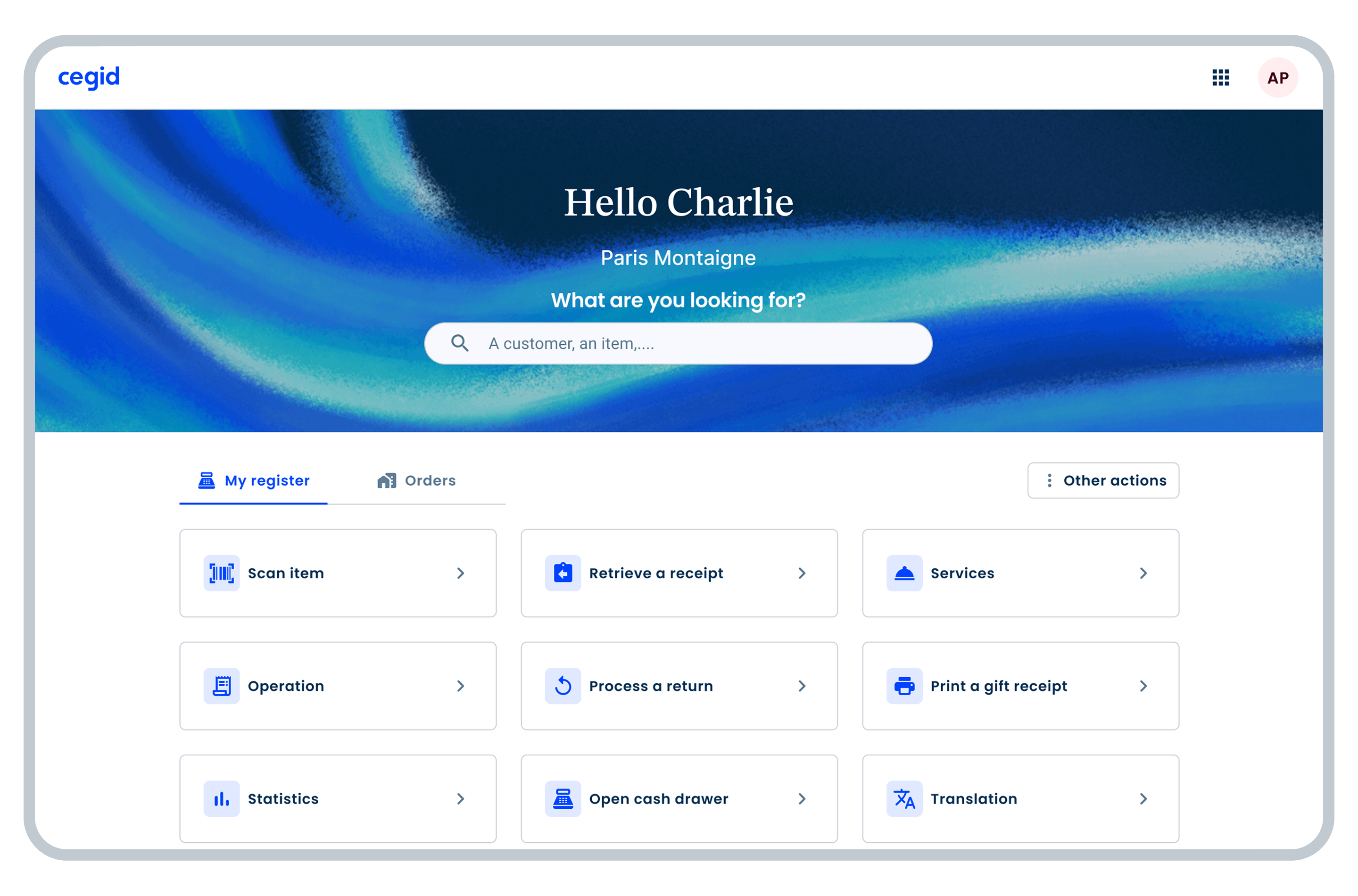
Cegid Retail
A unified sales platform dedicated to retail activities, for an exceptional shopping experience – maximum agility, anywhere in the world.
- Easily manage your omnichannel sales
- Maximize your stock availability
- Manage all your retail activities
- Secure & international SaaS solution
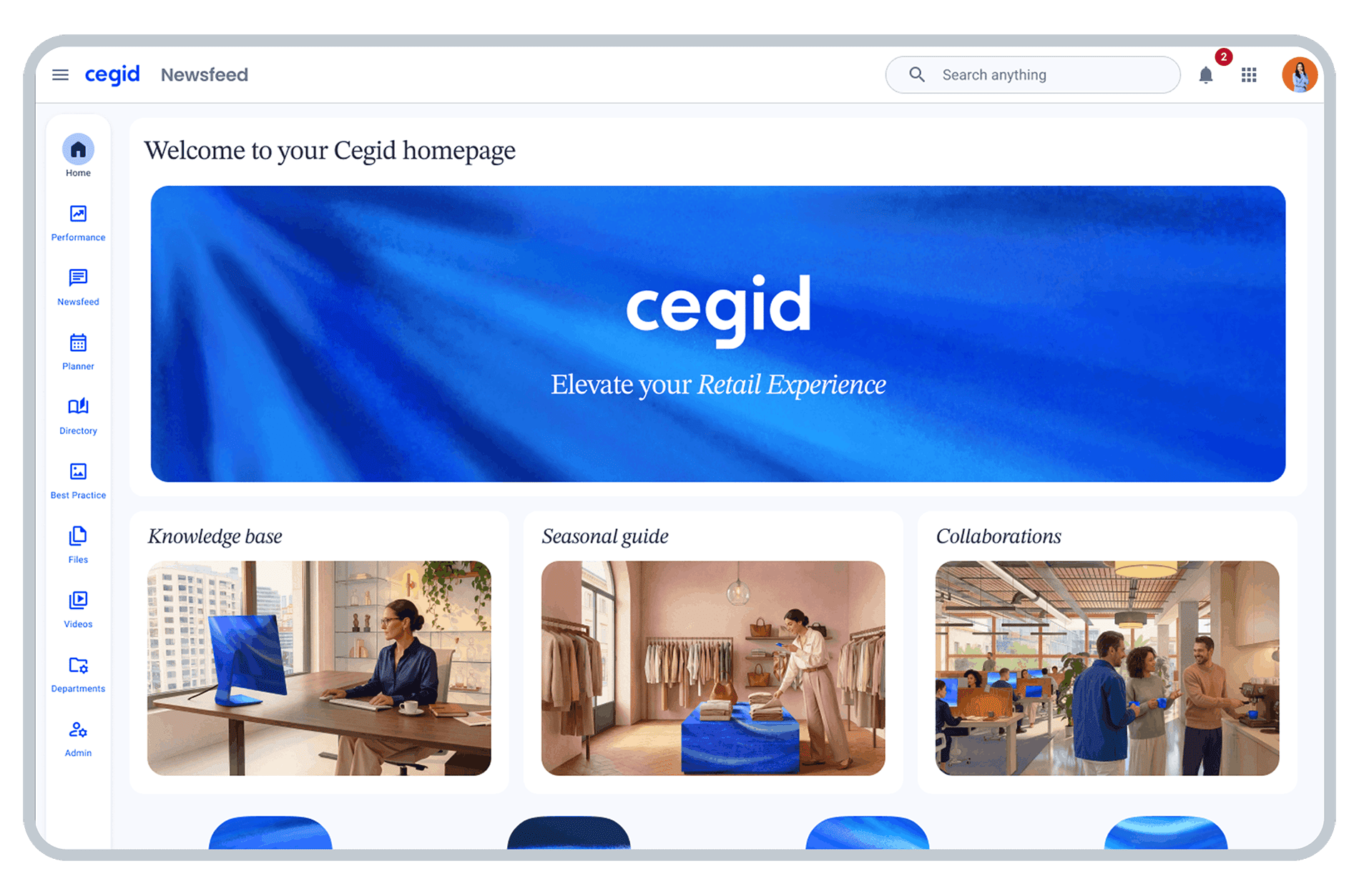
Cegid Retail Store Excellence
A powerful task management platform for all your retail teams.
- Stores will never miss a task again
- Clear and targeted operational comms
- Visual Merchandising Excellence
- Checks and audits you can count on
Our recommended articles
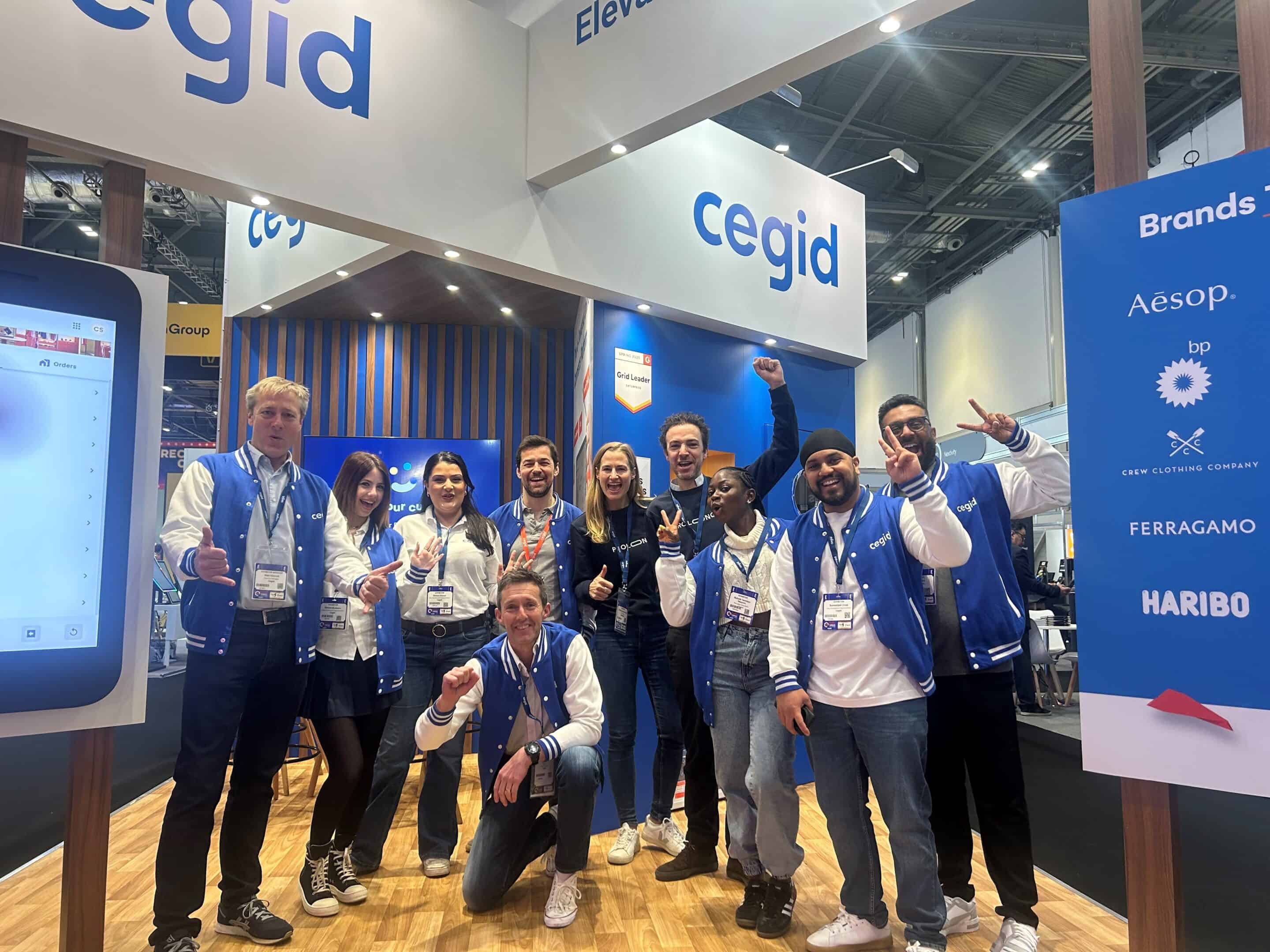
The Retail Technology Show 2025: With Cegid Pulse, Exploit the Full Power of AI
Discover how Cegid's Agentic AI, featured at the Retail Technology Show 2025, is transforming retail operations. From store management to HR and customer experience, learn how Cegid Pulse enhances productivity…
Article 7 October 2026 4 min

Retail: how to adapt to the current economic situation?
In the current economic landscape, retailers must strategize for success. Learn how to navigate challenges and thrive in the competitive retail industry.
Article 7 October 2026 5 min

Retailers’ Guide to Omnichannel Product Returns
81% of shoppers will switch to competitors after a bad product return experience. Find out how to offer a simple, frictionless product returns experience.
Article 7 October 2026 4 min